Introduction and Free Preview Free
Video Introduction Closed
Video Lecture - Lines 1-9 Closed
Video Lecture - Lines 10-13 Closed
Video Lecture - Lines 14-19 Closed
Video Lecture - Lines 20-22 Closed
Video Lecture - Lines 23-27 Closed
Video Lecture - Lines 28-32 Closed
Video Lecture - Lines 33-37 Closed
Video Lecture - Lines 38-41 Closed
Video Lecture - Lines 42-47 Closed
Video Lecture - Lines 48-52 Closed
Video Lecture - Lines 52-62 Closed
Video Lecture - Lines 63-65 Closed
Video Outro Closed
Intro Closed
LINE 1 4.Nf3 g6 - 5.Ng5 Closed
Chapter 1 - Memory Booster Closed
LINE 2 4.Nf3 g6 - 5, Be2 Closed
Chapter 2 - Memory Booster Closed
LINE 3 4.Nf3 g6 - 5, Be2 8.Nc3 Closed
Chapter 3 - Memory Booster Closed
LINE 4 4.Nf3 g6 - 5, Be2 13.b4 Closed
Chapter 4 - Memory Booster Closed
LINE 5 4.Nf3 g6 - 5, Be2 17...Na5 Closed
Chapter 5 - Memory Booster Closed
LINE 64.Nf3 g6 - 5, Be2 10.h3 Closed
Chapter 6 - Memory Booster Closed
LINE 7 4.Nf3 g6 - 5, Be2 10.h3 11.Be3 Closed
Chapter 7 - Memory Booster Closed
LINE 8 4.Nf3 g6 - 5, Be2 12.b3 Closed
Chapter 8 - Memory Booster Closed
LINE 9 4.Nf3 g6 - 5, Be2 10.h3 11.Bg5 Closed
Chapter 9 - Memory Booster Closed
LINE 10 4...g6 5.Bc4 - 7.a4 Closed
Chapter 10 - Memory Booster Closed
LINE 11 4...g6 5.Bc4 - 7.0-0 8.a5 N6d7 9.Bxf7+ Closed
Chapter 11 - Memory Booster Closed
LINE 12 4...g6 5.Bc4 - 7.a4 a5 Closed
Chapter 12 - Memory Booster Closed
LINE 13 4...g6 5.Bc4 - 7.a4 a5 8.exd6 Closed
Chapter 13 - Memory Booster Closed
LINE 14 4...g6 5.Bc4 7.Ng5 - 8.Qf3 Closed
Chapter 14 - Memory Booster Closed
LINE 15 4...g6 5.Bc4 7.Ng5 - 8.Qf3 10.Bf4 Closed
Chapter 15 - Memory Booster Closed
LINE 16 4...g6 5.Bc4 7.Ng5 - 8.Qf3 10.exd6 Closed
Chapter 16 - Memory Booster Closed
LINE 17 4...g6 5.Bc4 7.Ng5 - 8.Qf3 0-0 Closed
Chapter 17 - Memory Booster Closed
LINE 18 4...g6 5.Bc4 7.Ng5 - 8.Qf3 10.Nf3 Closed
Chapter 18 - Memory Booster Closed
LINE 19 4...g6 5.Bc4 7.Ng5 - 8.Qf3 12.Nxe5 Closed
Chapter 19 - Memory Booster Closed
LINE 20 4...g6 5.Bc4 7.Ng5 - 8.f4 Closed
Chapter 20 - Memory Booster Closed
LINE 21 4...g6 5.Bc4 7.Ng5 - 8.f4 9.fxe5 Closed
Chapter 21 - Memory Booster Closed
LINE 22 4...g6 5.Bc4 7.Ng5 - 8.f4 10.0-0 Closed
Chapter 22 - Memory Booster Closed
LINE 23 4...g6 5.Bc4 - 7.0-0 Closed
Chapter 23 - Memory Booster Closed
LINE 24 4...g6 5.Bc4 - 7.0-0 8.exd6 Closed
Chapter 24 - Memory Booster Closed
LINE 25 4...g6 5.Bc4 - 7.0-0 8.h3 Closed
Chapter 25 - Memory Booster Closed
LINE 26 4...g6 5.Bc4 - 7.0-0 9...dxe5 Closed
Chapter 26 - Memory Booster Closed
LINE 27 4...g6 5.Bc4 - 7.0-0 8.h3 9...Na5 Closed
Chapter 27 - Memory Booster Closed
LINE 28 4...Bg4 Closed
Chapter 28 - Memory Booster Closed
LINE 29 4...Bg4 - 11.c5 Closed
Chapter 29 - Memory Booster Closed
LINE 30 4...Bg4 - 12.gxf3 Closed
Chapter 30 - Memory Booster Closed
LINE 31 4...Bg4 - 14.Bd3 Closed
Chapter 31 - Memory Booster Closed
LINE 32 4...Bg4 - 15.Qg4 Closed
Chapter 32 - Memory Booster Closed
LINE 33 4.c4 5.f4 - 10.d5 Closed
Chapter 33 - Memory Booster Closed
LINE 34 4.c4 5.f4 - 10.d5 13.e6 Closed
Chapter 34 - Memory Booster Closed
LINE 35 4.c4 5.f4 - 11.Be2 Closed
Chapter 35 - Memory Booster Closed
LINE 36 4.c4 5.f4 - 11.Be2 15.Qc1 Closed
Chapter 36 - Memory Booster Closed
LINE 37 4.c4 5.f4 - 11.Be2 15.Kh1 Closed
Chapter 37 - Memory Booster Closed
LINE 38 4.c4 - 5.f4 Bf5 Closed
Chapter 38 - Memory Booster Closed
LINE 39 4.c4 - 5.f4 Bf5 9.Be2 Closed
Chapter 39 - Memory Booster Closed
LINE 40 4.c4 - 5.f4 Bf5 9.Bd3 Closed
Chapter 40 - Memory Booster Closed
LINE 41 4.c4 - 5.f4 Bf5 9.Bd3 10.Bxf5 Closed
Chapter 41 - Memory Booster Closed
LINE 42 4.c4 - 5.exd6 Closed
Chapter 42 - Memory Booster Closed
LINE 43 4.c4 - 5.exd6 7.h4 Closed
Chapter 43 - Memory Booster Closed
LINE 44 4.c4 - 5.exd6 7.Bd3 Closed
Chapter 44 - Memory Booster Closed
LINE 45 4.c4 - 5.exd6 9.0-0 Closed
Chapter 45 - Memory Booster Closed
LINE 46 4.c4 - 5.exd6 7.h3 Closed
Chapter 46 - Memory Booster Closed
LINE 47 4.c4 - 5.exd6 7.h3 8.Be3 Closed
Chapter 47 - Memory Booster Closed
LINE 48 4.c4 - 5.exd6 8.Rc1 Closed
Chapter 48 - Memory Booster Closed
LINE 49 4.c4 - 5.exd6 8.Rc1 9.b3 Closed
Chapter 49 - Memory Booster Closed
LINE 50 4.c4 - 5.exd6 8.Rc1 9.b3 11.Qxd8 Closed
Chapter 50 - Memory Booster Closed
LINE 51 4.c4 - 5.exd6 10.Nf3 Closed
Chapter 51 - Memory Booster Closed
LINE 52 4.c4 - 5.exd6 11...Bg4 Closed
Chapter 52 - Memory Booster Closed
LINE 53 3.c4 Closed
Chapter 53 - Memory Booster Closed
LINE 54 3.c4 - 4.c5 5.Nc3 Closed
Chapter 54 - Memory Booster Closed
LINE 55 3.c4 - 8.Nxd5 Closed
Chapter 55 - Memory Booster Closed
LINE 56 3.c4 - 5.d4 Closed
Chapter 56 - Memory Booster Closed
LINE 57 3.c4 - 5.Bc4 Closed
Chapter 57 - Memory Booster Closed
LINE 58 3.c4 - 5.Bc4 6...d6 Closed
Chapter 58 - Memory Booster Closed
LINE 59 3.c4 - 6.d4 Closed
Chapter 59 - Memory Booster Closed
LINE 60 3.c4 - 7.Nc3 Closed
Chapter 60 - Memory Booster Closed
LINE 61 3.c4 - 7.cxb6 Closed
Chapter 61 - Memory Booster Closed
LINE 62 3.c4 - 8.Bxd5 Closed
Chapter 62 - Memory Booster Closed
LINE 63 2. miscellanea Closed
Chapter 63 - Memory Booster Closed
LINE 64 2.Nc3 Closed
Chapter 64 - Memory Booster Closed
LINE 65 2.Nc3 - 3.Nce2 Closed
Chapter 65 - Memory Booster Closed
Test Section Closed
Alekhine Defence - Complete Solution to 1.e4
Preview by GM Mihail Marin

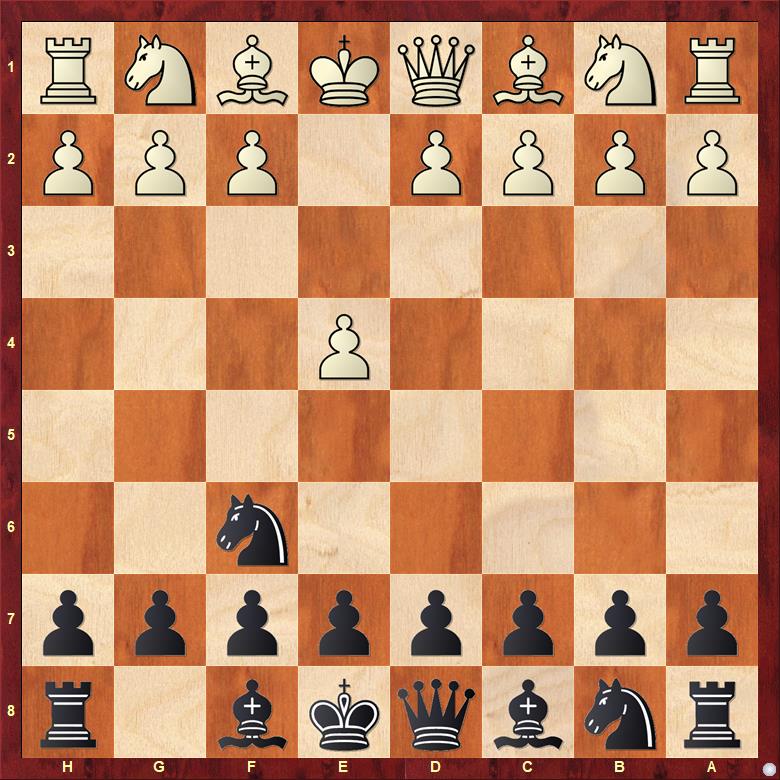
The Alekhine Defence is one of those opening having an appropriate name. True, the first recorded game with this opening was played in 1802 by Napoleon Bonaparte, against his favourite opponent, Madame de Remoussat, a countess. Probably a cavalry lover, Napoleon always started his games by moving both knights, regardless of colour.
There were occasional games featuring the Alekhine Defence between 1880 and 1920, but the opening game into the limelight only during the Budapest 1921 tournament, where Alekhine used it twice. It is the kind of provocative opening that tends to pass through years or full decades of crisis.
As a child, I remember reading that grandmaster Lev Alburt, a Soviet player at that time, complained that his main openings with Black, the Volga (Benko) gambit and the Alekhine Defence are passing through a strong crisis, causing him to have worse results than usual. On the other hand, if we compare it with the Sicilian Dragon (or the Volga/Benko gambit), belonging to the same category, this is a bit surprising. The Alekhine Defence is by far more flexible, allowing Black to choose more than one setup in all the critical systems.
This latter aspect made me adopt a different approach than in all my previous courses published by Modern Chess. Usually, I examine one line against all the opponent's systems. This time, I have analyzed two or more alternatives for Black, whenever the case was given (not in the minor lines, though). I had two main reasons for that. First of all, the way I built this database can offer a reliable repertoire for a long time.
By alternating the lines, we can make the opponent's preparation harder. If one of them passes through a crisis, there always is a reserve.
At the same time, I wanted to use the rich content of this opening to create some sort of multi-sided course on strategy, in tight connection with dynamics and tactics.
The Alekhine Defence is mainly about structures, but the player with less space should always be aware of the dynamic elements, allowing him to disrupt the enemy (sometimes over extended) centre. Black's flexibility is obvious if we think that he can choose between playing on dark or light squares. A mixture of these is also possible.
Before he started his fulminant ascension toward the chess throne, Bobby Fischer was famous for his narrow repertoire. In the years preceding the historic 1972 match, something had changed, though. He started to occasionally open the game with 1.b3, while with Black he adopted the Alekhine Defence as an alternative to his beloved Sicilian Najdorf. In his attempt to sidestep Spassky's preparation, he also played it twice in Reykjavik, winning one and drawing the other. Moreover, he did not choose the same system in the games. In the 13th game he answered 4.Nf3 with 4...g6, as he had always done before, while in the 19th he switched to the more static 4...Bg4, for the first time in his life.I have inserted Fischer's 6 games played in 1970 and 1972, leaving out that one played in 1965, which is less sound.
Few words about how I have come to the idea of writing this database. One evening dring our team championship, my colleague GM Lucian Miron complained to me that earlier that day, he could not get anything against an older player who had played 1...Nf6 against him. I opened my portable chess set and invited him to analyze a bit this opening, far from engines and books. I was pleasantly surprised that I could remember most of the critical ideas and move orders, even though I had played the Alekhine Defence only a few times two decades ago. Even though he started with the firm belief that engines are smashing Black's opening, Lucian gradually became interested in this opening, since he did not see obvious ways of refuting it.
When I arrived in my room, I checked a few points of our joint analysis and discovered that engines had grown enough to understand that this was a sound opening. Twenty years ago, I had only used it as an experiment because engines were so skeptical about it. When choosing an opening against 1.e4, I am frequently concerned about having a weapon against 1.d4 leading to positions at least vaguely similar. I recommend the Gruenfeld as a good complement to the Alekhine Defence. In both openings, Black invites his opponent to build up a massive centre to start attacking it in the early middlegame.
The database consists of 65 theoretical chapters, 30 interactive test positions, a Memory Booster, and a Video Version (6h and 30min Running Time)
PGN INTRODUCTION
Chess Viewer A0DXLFRJOU0NUD4W0NEH9L2AYZ7XT4F1
Video Introduction


