
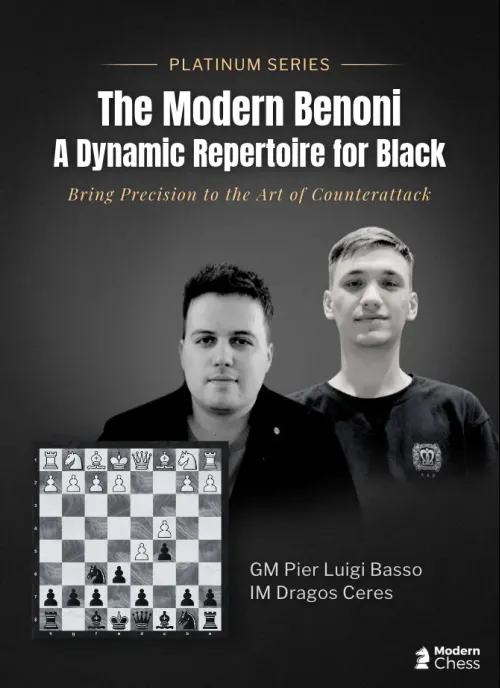
This course offers a complete Modern Benoni repertoire for Black, providing concrete, deeply analyzed solutions to White's most challenging systems—including a key equalizing resource against the critical 7.f4 line. Across 16 chapters covering 7.Bf4, Nd2 systems, the classical main line, and the Fianchetto, it emphasizes practical fighting ideas over rote engine moves, preserving the Benoni's dynamic spirit while meeting modern theory with confidence.
6h 7m PGN Available Memory Booster Interactive Tests Computer Practice
PGN Languages:


Mastering the Benoni Structure covers the strategic ideas and timing decisions that define the Modern Benoni for both colours, rather than a move-by-move opening repertoire. The course examines White's central space and the e4–e5 breakthrough against Black's queenside majority, active pieces, and counterplay resources such as the ...Rxe3 exchange sacrifice and the ...b5 advance. It was written by GM Vladimir Malakhov.
4h 7m PGN Available Interactive Tests
PGN Languages:
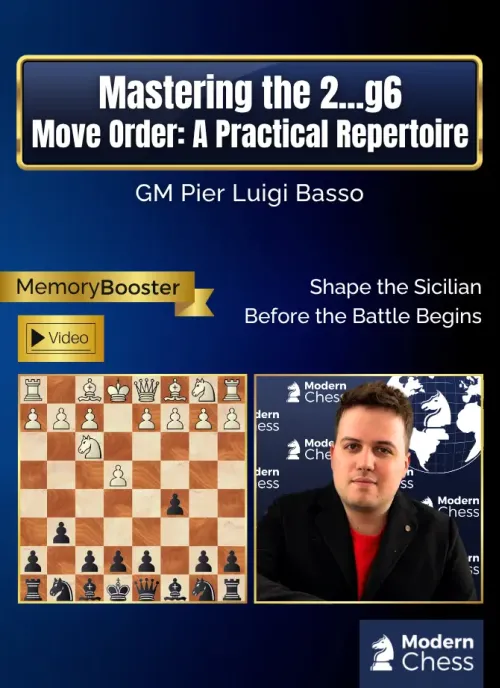
GM Pier Luigi Basso's Mastering the 2...g6 Move Order offers a practical Accelerated Dragon repertoire after 1.e4 c5 2.Nf3 g6, avoiding several annoying lines that arise after 2...Nc6. It covers every Anti-Sicilian White can try—including the critical Alapin (met by 3...d5!), 4.Qxd4 lines, and 3.Bc4—and pairs with Basso's Open Sicilian course for a complete repertoire after 2.Nf3. Includes 10 chapters, video instruction, model games, test/training positions, a memory booster, and multilingual PGN.
2h 7m PGN Available Memory Booster Interactive Tests Computer Practice
PGN Languages:
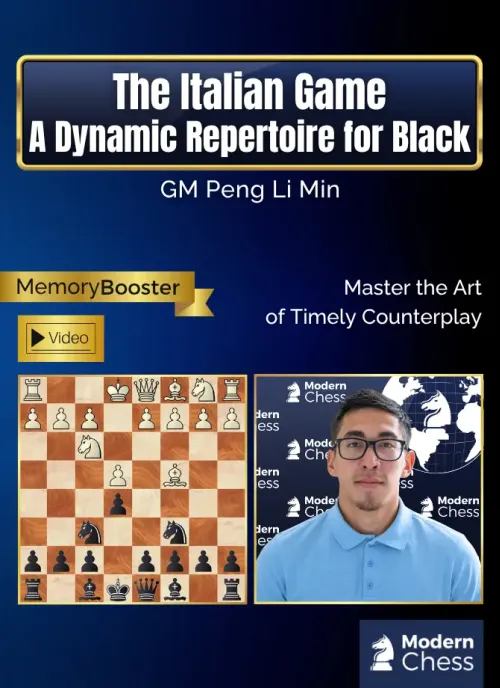
GM Peng Li Min presents The Italian Game: A Dynamic Repertoire for Black, built on 3...Nf6 and 4...Be7 against the quiet Italian (4.d3). Rather than relying on forcing lines, the course teaches one solid structure with three recurring plans: fixing the queenside against White's a-pawn advances, the central break ...d5, and a slower kingside plan (...Kh8 and ...Ng8/...Nd7 preparing ...f5). This ideas-based approach aims to give Black a reliable, flexible lifetime repertoire.
PGN Available Memory Booster Interactive Tests
PGN Languages:
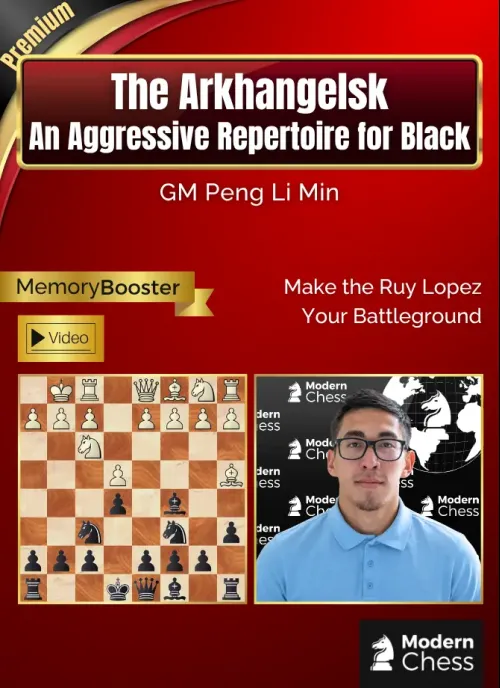
GM Peng Li Min presents The Arkhangelsk: An Aggressive Repertoire for Black, a course built around 5...Bc5 and ...b5 against the Ruy Lopez, designed so Black dictates the game's direction. It features a consistent setup with a fresh main-line idea (8...Ba7!? after 6.c3 b5 7.Bb3 d6 8.a4), covers all White deviations across 15 chapters, and emphasizes active piece play. The author is a Ukrainian-born Swiss GM (title in 2022, peak 2575) who also created a companion Italian Game course.
5h 9m PGN Available Memory Booster Interactive Tests Computer Practice
PGN Languages:

Dreev University – Rook Endgames Part 3 by GMs Alexey Dreev and Pier Luigi Basso teaches players to recognize the critical decision in rook endgames. Its 38 positions build through three stages: 20 positions around five fundamental questions, 8 mixed positions without guidance, and Dreev's Challenge—10 positions analyzed by Dreev, including recent Olympiad examples. The aim is instinct-building, not memorization.
1h 31m PGN Available
PGN Languages:
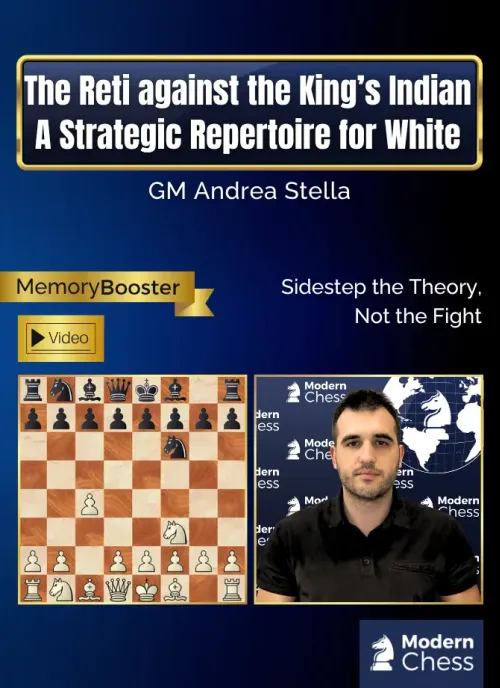
Every Réti player facing ...Nf6, ...g6 and ...d6 eventually has to decide whether to play d2-d4. It's the natural move, but it leads straight into King's Indian theory. After 6.d4 Nbd7 7.Nc3 e5 8.e4, the main reply 8...c6 alone counts around 16,000 games.
GM Andrea Stella's answer is to stay out of it. White keeps the pawn on d3, lets Black play ...e5, and turns the game into a strategic fight on his own terms, far from the usual King's Indian battlegrounds.
Sequence: KIA According to Stella »
1h 52m PGN Available Memory Booster Interactive Tests Computer Practice
PGN Languages:
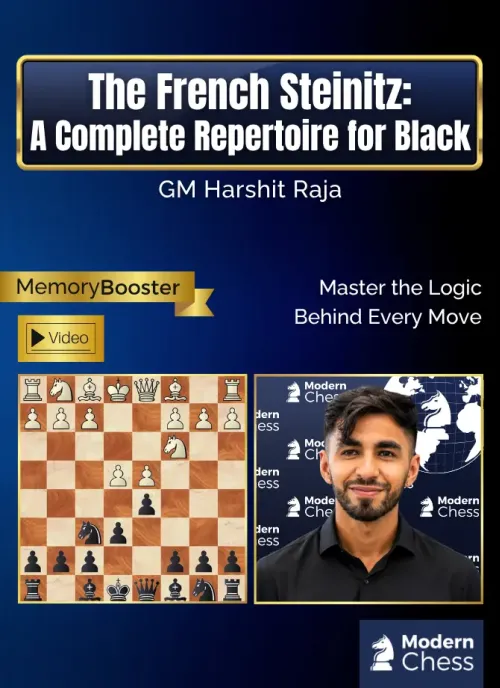
GM Harshit Raja's The French Steinitz: A Complete Repertoire for Black answers 3.Nc3 Nf6 with a practical, understanding-based approach: Black meets White's e5–f4 wedge with ...c5, ...Nc6, and the flexible ...a6 preparing ...b5, giving a consistent plan against all of White's setups. Covering 4.exd5, 4.Bg5, and the main 4.e5 lines across 10 chapters, it complements the author's sharper Winawer to give Black a genuine choice against 3.Nc3.
2h 14m PGN Available Memory Booster Interactive Tests
PGN Languages:
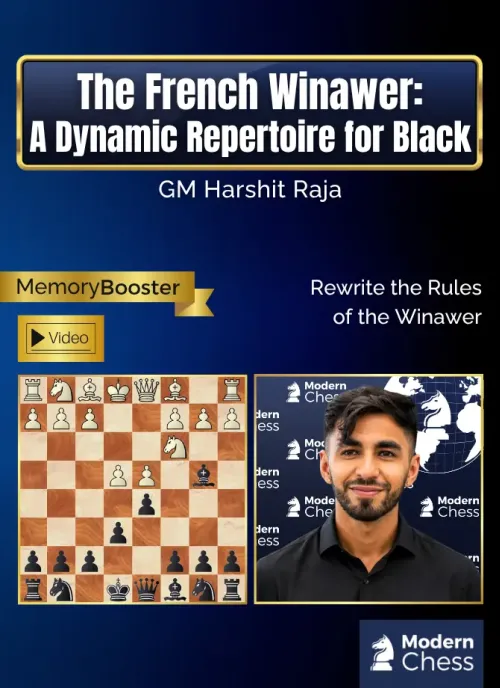
GM Harshit Raja's The French Winawer: A Dynamic Repertoire for Black builds a complete answer to 3.Nc3 Bb4 around the rare 6...Nc6!?—a Rapport-inspired idea that develops queenside pieces first and castles long, away from White's kingside attack. Across 10 chapters it covers all of White's serious setups, with 20 test positions, Memory Booster, video instruction, and multilingual PGNs, offering a sharp alternative to the author's Steinitz repertoire.
1h 36m PGN Available Memory Booster Interactive Tests
PGN Languages:
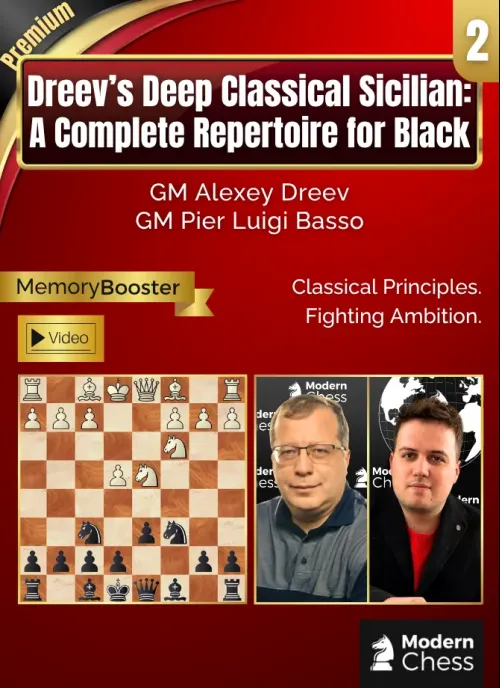
When Bobby Fischer and Dragoljub Velimirović wanted to fight the Classical Sicilian, they reached for 6.Bc4, the Sozin. The bishop aims straight at Black's kingside, and decades later it remains the most important alternative to 6.Bg5.
GM Alexey Dreev's answer is immediate. After 6...Qb6 7.Ndb5 he plays 7...Bg4!?, a move Vladimir Kramnik tried only once, back in 1996. It is rare, it is sound, and in Dreev's own words, your opponent will be surprised.
3h 54m PGN Available Memory Booster Interactive Tests Computer Practice
PGN Languages:

