
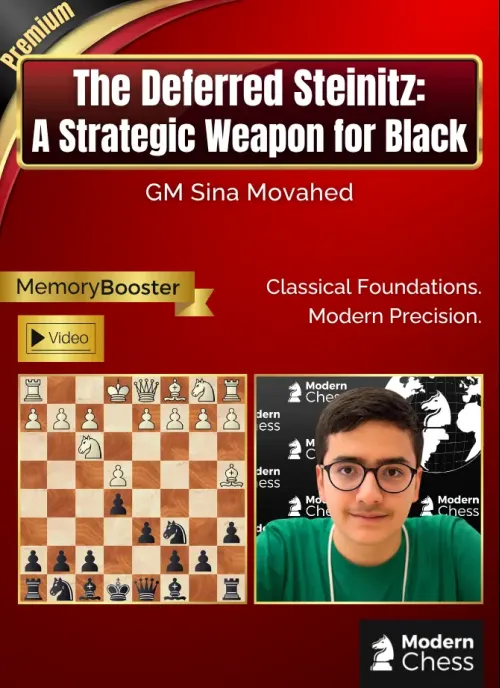
Wilhelm Steinitz built his legacy on a single, radical idea: that sound defence could outlast the most brilliant attack. The opening that still carries his name — the Deferred Steinitz, 1.e4 e5 2.Nf3 Nc6 3.Bb5 a6 4.Ba4 d6 — inherited that DNA. Protect the centre, develop without haste, and let solidity do the work.
For more than a century that solidity came with a quiet reputation to match. In The Deferred Steinitz – A Strategic Weapon for Black, GM Sina Movahed keeps the soundness and deletes the passivity. His version of the old defence is built to play for a win against the Ruy Lopez.
3h 11m PGN Available Memory Booster Interactive Tests Computer Practice
PGN Languages:


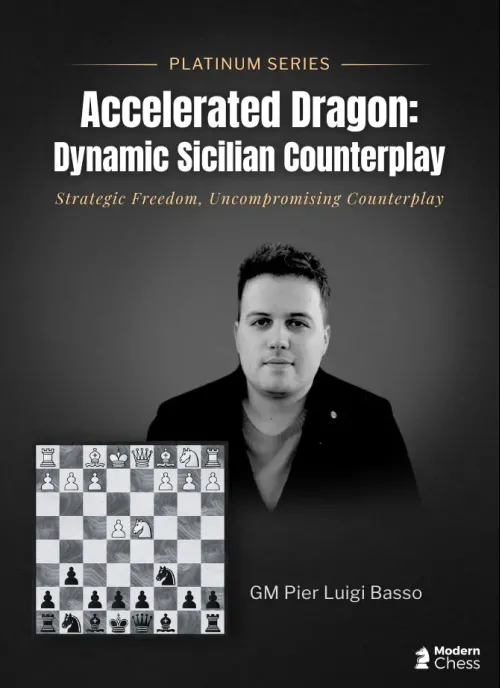
The most uncomfortable recommendations tend to come from the other side of the board. GM Pier Luigi Basso has spent years building and playing White's sharpest tries against the Accelerated Dragon — and in Accelerated Dragon: Dynamic Sicilian Counterplay, he hands Black the exact setup he would least like to meet himself.
The appeal is easy to state. The Accelerated Dragon offers everything the ordinary Dragon does — the bishop on g7, pressure down the c-file, a real three-result game — but with one structural bonus. Because the d-pawn stays on d7, Black keeps ...d5 in reserve as a single move, and the Yugoslav Attack that gives the classical Dragon its reputation never gets the same grip.
3h 22m PGN Available Memory Booster Interactive Tests Computer Practice
PGN Languages:
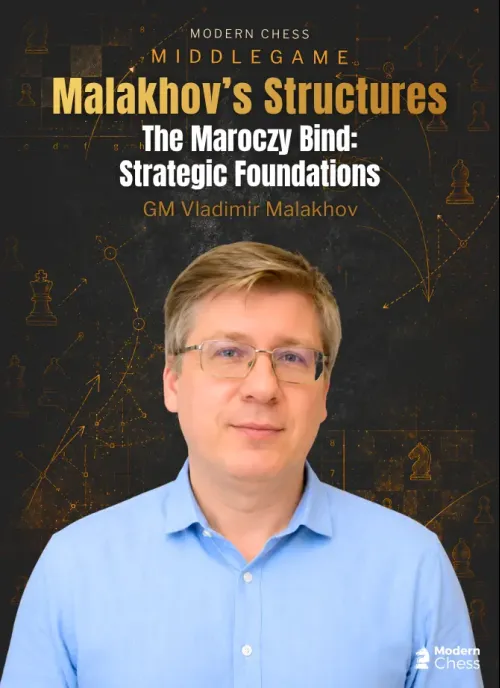
The Maroczy Bind carries the name of a player who never set it up with the white pieces. As Malakhov points out, Géza Maroczy — oddly enough — never played the structure as White at all; he appears on the Black side of the game that gave it its name, Swiderski–Maroczy, Monte Carlo 1904.
It is a fitting emblem for a structure that always had to be read from both sides of the board. The same two pawns on c4 and e4 can mean a slow, suffocating squeeze or a springboard for counterplay, depending entirely on who understands the position better.
That double vision is the premise of The Maroczy Bind - Strategic Foundations by GM Vladimir Malakhov. It is a structures course, not a repertoire — there are no long forcing lines to memorise. Instead it studies the formation itself: what each side is trying to do, which pieces to exchange and which to keep, where the pawn breaks live, and the exact moment a natural-looking move becomes a serious error.
Sequence: Universal Pawn Structures »
3h 59m PGN Available Interactive Tests
PGN Languages:
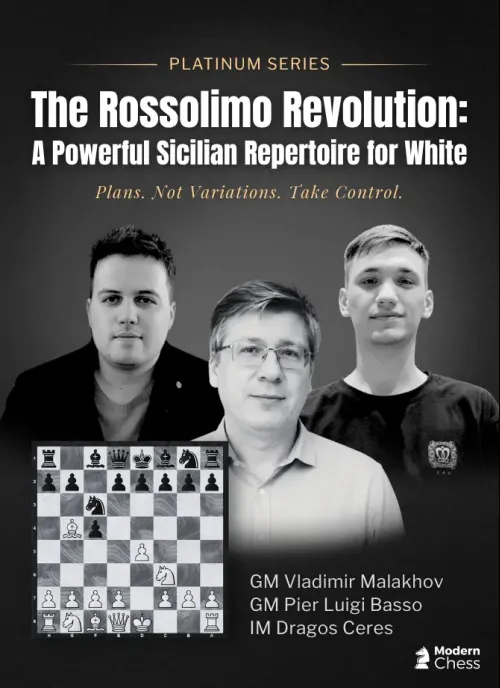
The Open Sicilian is a race of memory — the Sveshnikov, the Taimanov and the Najdorf are ground Black's specialists know well. GM Vladimir Malakhov spent most of his career declining that race. His answer to 2...Nc6 is 3.Bb5, the Rossolimo: White gives up the bishop to damage Black's pawn structure, and in return plays for plans rather than long forcing lines, with clear, durable trumps of his own.
The Rossolimo Revolution: A Powerful Sicilian Repertoire for White, by GM Vladimir Malakhov, GM Pier Luigi Basso and IM Dragos Ceres, is built on that idea and sharpens the old system with directions well off the beaten path.
6h 12m PGN Available Memory Booster Interactive Tests Computer Practice
PGN Languages:
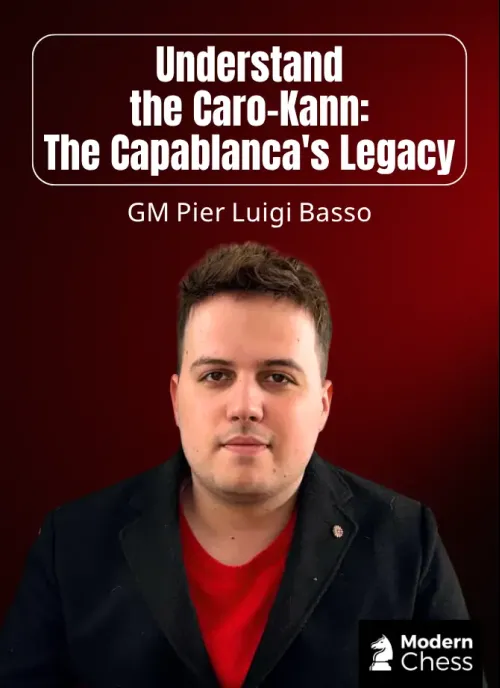
Capablanca learned the Caro-Kann without a single engine line to lean on. He trusted structure, harmony, and the endgame, and in the 1920s and 30s he turned an opening still dismissed as second-rate into a defense he could rely on against the strongest players in the world.
That is the thread GM Pier Luigi Basso follows here. He reads Capablanca's games as a diagnostic tool: the moments where the third World Champion's intuition already pointed to what modern theory confirms, and, just as revealing, the moments where he stopped short of ideas that would only be discovered decades later.
3h 14m PGN Available Interactive Tests Computer Practice

The Caro-Kann has spent a century as the opening players reach for when they want to be hard to beat. The structure stays healthy, the light-squared bishop escapes before ...e6 shuts it in, and there are very few ways for White to force matters over the board. That reputation is deserved — but it has also turned the opening into a synonym for quiet, and that is the reputation this repertoire sets out to revise.
The Modern Caro-Kann: A Complete Repertoire for Black – Part 1
This course by GM Szymon Gumularz and FM Sebastian Reimann rests on a single conviction: solid does not have to mean passive. The repertoire keeps everything that makes the Caro-Kann reliable, then looks for the ambition in each position — the moment where Black can play for more than a draw. Part 1 is devoted entirely to the Classical Variation, White's most respected reply for a hundred years and the line any Caro-Kann player has to know first.
2h 59m PGN Available Memory Booster Interactive Tests Computer Practice
PGN Languages:

A single capture gives this repertoire its shape. In GM Sina Movahed's Ruy Lopez it's Bxc6 — White trading the Spanish bishop for the c6-knight, an old resource that here turns on when it's played. Movahed's case is structural: reach for it at the right moment and Black is left with pieces poorly suited to the position that results.
His foundation is the deferred exchange: 5...Be7 6.Bxc6. Instead of capturing on move four, Movahed waits until Black has committed the bishop to e7 and the knight to f6 — and then argues those very pieces sit awkwardly for the pawn structure that arises after ...dxc6. The aim is not to refute the Ruy Lopez, but to hand Black an unfamiliar middlegame from an entirely familiar move order.
3h 42m PGN Available Memory Booster Interactive Tests Computer Practice
PGN Languages:

The French Defence has always carried one complaint louder than the rest: the light-squared bishop on c8, sealed behind its own pawns before the game has properly begun. The Fort Knox answers that complaint before it can be made. After 1.e4 e6 2.d4 d5 3.Nc3 dxe4 4.Nxe4 Bd7, Black's problematic piece steps out through d7 to c6 while the diagonal is open — the piece that usually spends the game being restricted becomes the first one developed.
The idea is simple and durable. The bishop on c6 is no longer a liability but a piece which will be traded — Black is content to give it up for a white knight, often with ...Bxe4, easing the cramped position. Black finishes developing with ...Nd7, ...Ngf6, ...Be7 and short castling, reaching a compact structure with no real weaknesses to attack, and only then looks to challenge White's centre with ...c5 or, in some lines, ...e5.
1h 48m PGN Available Memory Booster Interactive Tests Computer Practice
PGN Languages:

For decades, meeting the Caro-Kann with 3.e5 was treated as the modest reply. Releasing the central tension so early seemed to hand Black the very thing the opening is chosen for — a light-squared bishop developed to f5 in the open air, before ...e6 ever shuts it in. Nigel Short's advocacy in the early 1990s reshaped that judgment, showing that White's extra space in the Advance Variation is a lasting asset rather than a concession.
Crushing the Caro-Kann with 3.e5: White's Space Advantage, the new course by IM Deboushnik De, extends that idea instead of repeating it. Where Short built the space advantage slowly, this repertoire expands on both wings and starts posing questions from move four, aiming to deny Black the settled, comfortable game the Caro-Kann promises.
3h 2m PGN Available Memory Booster Interactive Tests
PGN Languages:

Somewhere along the way, the Italian Game quietly changed character. The first three moves stayed the same — 1.e4 e5 2.Nf3 Nc6 3.Bc4 — but the fourth became a slow d2-d3, and the Italian became known for patient maneuvering rather than early fireworks.
GM Mitrabha Guha's new course restores the Italian's older, faster character. The starting position is the familiar one, but at every crossroad, the repertoire takes the direct road rather than the quiet one.
1h 50m PGN Available Memory Booster Interactive Tests
PGN Languages: